Oct 30, 2023 Robert GordonLegal Profession
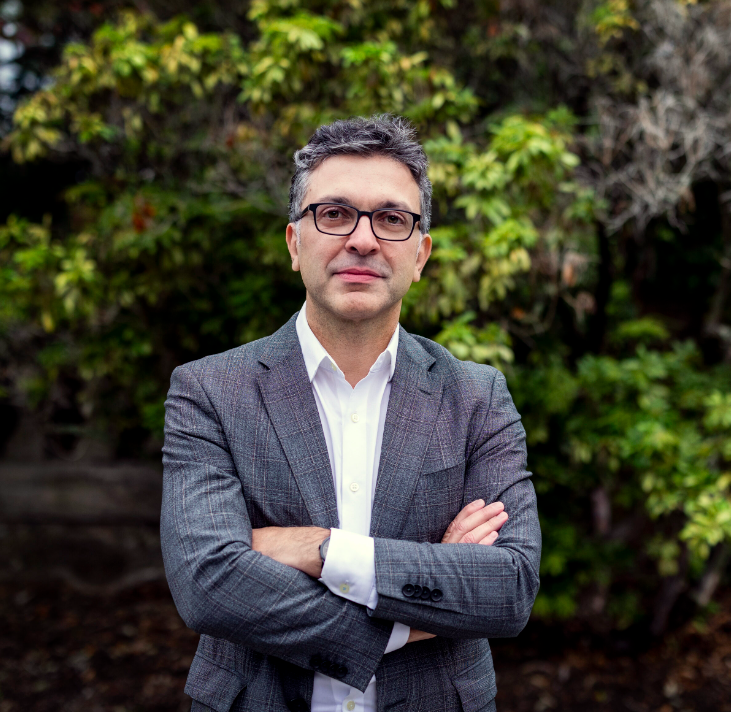
Michael Ariens has long been one of the best informed and most acute observers of the legal profession. His ambitious new book surveys the ethics of American lawyers from the Revolution to the present day. More precisely, it is a history of how lawyers talked about ethics in the nineteenth century, and of how lawyers and their organized associations, especially the American Bar Association, have tried to regulate ethics in the twentieth and twenty-first centuries. On these topics Ariens is extremely well-informed, and his footnotes are a comprehensive treasure trove of primary materials. He seems to have found almost every speech, tract, report, or regulation uttered by lawyers on the ethical principles that ought to define their professional identity, and on how lawyers actually live up, or fail to live up, to those principles.
Lawyers have always claimed to follow professional principles superior to their own commercial self-interest. In the early 19th century, Ariens says, American lawyers asserted that gentlemanly ideals of “honor” kept them from abusing clients or the public interest. Gradually talk of honor faded out, to be replaced with the more Protestant notion of individual “conscience” as the restraint on self-serving conduct. Lawyers deflected criticism onto scapegoats, blaming abuses such as meritless lawsuits or forensic trickery or defrauding clients on “pettifoggers”. Writers on legal ethics like David Hoffmann and George Sharswood advised lawyers to limit their zeal to avoid assisting injustice, deploring Lord Brougham’s famous advice that a lawyer must further a client’s interest to the utmost, heedless of harms to opposing interests or third parties. But, says Ariens, such strictures “did not match reality.” (P. 63). Lawyers argued they could be disbarred for bad behavior, but this rarely happened; a lawyer disbarred by one court could appear before another; and “neither the judiciary nor practicing lawyers showed much interest in disbarring venal lawyers to protect either the public or the profession’s claim to integrity during this time.” (P. 29). The public might be made uneasy by seeing famous advocates like Rufus Choate use courtroom wizardry to secure the acquittals of robbers and murderers, but lawyers assured their critics that such results were the unavoidable costs of assuring due process for everyone. Continue reading "A New History of Legal Ethics"
Oct 27, 2023 Anne Joseph O'ConnellAdministrative Law
Nicholas R. Bednar & David E. Lewis,
Presidential Investment in the Administrative State, Am. Pol. Sci. Rev., available at
Cambridge University Press (Mar. 13, 2023).
Presidents are quite popular in administrative law these days, from Elena Kagan’s classic article, Presidential Administration, to the Supreme Court’s fixation on presidential control in its growing Appointments Clause and removal docket. As legal scholars dissect and debate the doctrinal and normative implications of presidential attention in agency decision making, we could benefit from knowing more about how that involvement actually plays out.
In Presidential Investment in the Administrative State, Nicholas Bednar and David Lewis provide critical empirical lessons for how Presidents invest strategically (or not) in agency capacity, which encompasses “the ability of an agency to perform the tasks delegated to it.” They show that Presidents are not simply public administration savants—trying only “to ensure effective policy implementation and avoid failure.” And they demonstrate that Presidents are not pure partisans—“work[ing] to increase capacity in agencies implementing policies the president likes and decrease capacity in agencies implementing policies the president opposes.” The lessons are messier. Continue reading "Agency Capacity"
Oct 26, 2023 Phyllis C. TaiteTrusts & Estates
Brenda D. Gibson,
The Heirs’ Property: Racial Caste Origins & Systemic Effects in the Black Community, __
CUNY L. Rev. __, (forthcoming, 2023) available at
SSRN (Aug. 31, 2022).
Professor Gibson provides a unique look at Black land loss through heirs’ property in the Low Country, an area located on the southern tip of South Carolina which includes the Sea Islands. Her paper concludes that “heirs’ property is more a product of the deeply entrenched racial caste system of racist governmental processes and laws that have militated against Black land ownership and wealth.” As such, she indicates that landownership has been a source of wealth mobility for some, but that intestacy succession to property has caused wealth to decline in the Low Country, disproportionately for Black landowners.
After a brief historical review of the obstacles and hardships of Black landownership since the Reconstruction era, Professor Gibson analyzes how systemic racism has impacted Black land loss in the South, specifically in the Low Country. She begins by explaining how farming was the primary source of income for many Black landowners in Low Country. By the end of the 20th century, however, Black farmers had lost over ninety percent of their land. She attributed these substantial losses to government action, commercial developers, and the complicated nature of heirs’ property. Continue reading "A Path for Wealth and Cultural Restoration for the Gullah-Geechee Residents of the Low Country"
Oct 25, 2023 Emily SatterthwaiteTax Law
Following the January release of a groundbreaking study by Hadi Elzayn, Robin Fisher, Jacob Goldin, Thomas Hertz, Daniel E. Ho, Arun Ramesh, and Evelyn Smith and the resulting media, Congressional, and IRS attention, it is now well-known that Black taxpayers are audited at rates three to five times the rates of non-Black taxpayers. The audit study is a landmark both for its results (which contradict past IRS statements) and also for its novel methodology, which uses individually-estimated taxpayer race probabilities to obtain informative bounds on the racial audit rate disparity. In addition to illuminating problematic patterns in current IRS audit selection procedures, the study’s methodology offers promise for the future in investigating other race-based patterns in tax enforcement.
In what non-audit enforcement areas might such patterns arise? Here is where the prescient work of Jeremy Bearer-Friend (as cited in the audit study, P. 41) comes in, building on the work of other scholars working at the intersection of race and tax. In “Colorblind Tax Enforcement,” Bearer-Friend refutes on first principles the now-debunked claim that because the IRS does not collect race data, it cannot discriminate by race when enforcing tax laws. He points out that, for IRS agents, making inferences about the race of a taxpayer on the basis of the information provided on the return (names of taxpayer, spouse, and children, address including zip code, family structure, and occupation) is plausible and probable: “[e]ach of these datapoints can lead to inferences of racial identity in the mind of the relevant IRS personnel, with the combination of data points creating a stronger likelihood of inference” (P. 19). Moreover, at many points in the enforcement process there are telephonic or in-person conferences that allow for further racial inferences. Continue reading "Beyond Audits: Investigating the Role of Race in Various Tax Enforcement Settings"
Oct 24, 2023 Ronen AvrahamTorts
Maytal Gilboa, Yotam Kaplan & Roee Sarel,
Climate Change as Unjust Enrichment, __
Geo. L.J. __ (forthcoming), available at
SSRN (July 6, 2023).
When considering the essence of law, it becomes evident that its fundamental purpose is to safeguard our safety and well-being. However, amidst the many challenges facing humanity, the law has fallen short in shielding us from one of the gravest threats to our lives and way of life – climate change. In a new thought-provoking piece, Climate Change as Unjust Enrichment, Maytal Gilboa, Yotam Kaplan, and Roee Sarel (hereafter referred to as GKS) offer a glimmer of hope. Where international treaties, regulations, and tort law have faltered, GKS propose harnessing the oft-forgotten doctrine of unjust enrichment as a means to rescue us from the dire consequences of climate change.
Climate change, aptly dubbed the “super wicked” problem, presents an overwhelming challenge. Its impacts include severe food crises, water scarcity, rampant infections, increased rainfall and flooding, and escalated violence, among other dire consequences. Moreover, the complex nature of climate change’s harms, distributed across vast populations and with long-term effects, poses formidable barriers to effective intervention. Continue reading "Just Unjust Enrichment"
Oct 23, 2023 Rebecca TushnetTechnology Law
Jasmin Brieske & Alexander Peukert,
Coming into Force, Not Coming into Effect? The Impact of the German Implementation of Art. 17 CDSM Directive on Selected Online Platforms, CREATe Working Paper, available at
SSRN (Jan. 25, 2022).
The European Union has been busy updating its regulation of online services in a variety of ways. This includes a recent directive that directs Member States to institute a new online copyright regime. Services that host user-generated content will be required to keep unlicensed works off of their sites, and also required to negotiate with copyright owner groups for licensing agreements. In essence, other hosting sites will have to behave like YouTube in its deals with major music and film labels. This new regime was imposed by what’s known as Art. 17 of the 2019 Directive on Copyright in the Digital Single Market (CDSM Directive). (The Digital Services Act further complicates the picture because it overlaps with the laws required by Art. 17 and adds to their requirements, but I will focus here on Art. 17.)
Unlike its content-agnostic counterpart the Digital Services Act, the copyright-specific Art. 17 does not itself have the force of law; it requires transposition into national law, and different countries have taken different approaches to that transposition. Germany’s transposition has been one of the most ambitious and user-oriented. Brieske & Peukert’s working paper Coming into Force, Not Coming into Effect? The Impact of the German Implementation of Art. 17 CDSM Directive on Selected Online Platforms explores how the new German regime affected—and didn’t affect—the copyright-related policies and practices of major sites. As it turns out, neither the user protections nor the rightsowner protections seem to have changed the practices of the big sites—giving more evidence that the major impact will be on smaller sites that may not even have had the problems that purportedly justified this new licensing-first regime. The piece is an important reminder that implementation is everything: New legislation is exciting and produces lots of work for lawyers, but that doesn’t mean it produces wider change. Continue reading "Best Laid Plans: The Challenges of Implementing Article 17"
Oct 20, 2023 Ezra RosserProperty
It is easy to forget that until recently, states paid bounties on the killing of a whole range of animals. In Property in Wolves, Professor Jack H.L. Whiteley explores the history of such bounties and of the ways such bounties subsidized particular forms of property ownership. His work is both eye-opening and provocative.
Anyone who has lived in rural parts of the mountainous west has witnessed the phenomena of a line of cars pulled onto the shoulder of the road, with excited occupants craning their necks or pulling out cameras to capture the sight of a wild animal walking nearby. Usually such sightings are limited to moose, elk, or bighorn sheep, but occasionally one can see a coyote, bobcat, or even a wolf. Such animals, joined by mountain lions, foxes, lynxes, and jaguars, among others, today are celebrated, painted onto the tail fin of Frontier Airlines’ planes, and often legally protected. Continue reading "Bounties for Animal Eradication as a Private Property Subsidy"
Oct 19, 2023 Paulo BarrozoJurisprudence
Samuel Moyn,
Reconstructing Critical Legal Studies, Yale L. Sch., Pub. L. Rsch. Paper (Aug. 4, 2023), available at
SSRN.
The CLS Movement thematized domination, contradiction, instability, interpretation, distribution, personal empowerment, interpersonal connections, and the claims of reason. Attitudinally, it had a 70s contrarian and (American) left temperament. Like all movements, networking rather than consistency was its core. Aware of the centrality of legal discourse and actors to social arrangements and outcomes, the movement sought transformative impacts beyond the privileged walls of law schools. CLS lasted as much as any movement can expect to, and it had important (especially pedagogical and curricular) successes.
That was the movement. What about CLS Theory? In Reconstructing Critical Legal Studies, Samuel Moyn offers a fast-paced and yet penetrating inventory of theoretical problems and approaches in order to recommend the “social theory of law” variant of CLS theory. Continue reading "What Critical Theory?"
Oct 18, 2023 Jessica SilbeyIntellectual Property Law
Andrew Gilden & Eva E. Subotnik,
Copyright’s Capacity Gap, 57
U.C. Davis L. Rev. __ (forthcoming, 2023), available at
SSRN (Aug. 9, 2023).
In this forthcoming article, Andrew Gilden and Eva Subotnik begin an important conversation about an underexplored area of copyright law. Their focus is copyright law’s inconsistent treatment of mental capacity. Under copyright law, copyright authors can produce valuable copyrighted work but those same authors may lack the legal capacity to make decisions about if, when, or how to exploit that work. For example, children and people with mental illness or disability can be copyright authors, but they cannot license that work (or refuse to license it) without a legally competent surrogate. The authors explain that this inconsistency leads to injustices for which they offer reforms.
The article starts with the engaging example of the Britney Spears’ 13-year conservatorship, controlled by her father, which from the age of 26 prevented her from making decisions about her life and career. All the while, Spears wrote and performed her songs, building a multimillion dollar portfolio over which she had no control. She was the author of her music, but she had no control over it because she lacked the legal capacity to form binding contracts, or so said a court. She resisted the conservatorship without success for over a decade. The article is full of many other such examples, including of teenage authors, elderly creators, and authors with mental illnesses. Continue reading "Copyright Fiduciaries: Problems and Solutions"
Oct 17, 2023 Shubha GhoshInternational & Comparative Law
Five years ago, I jotted here about The Internationalists, an engaging book from Professors Oona Hathaway and Scott Shapiro about the changing nature of war in the twentieth century. Professor Shapiro continues that inquiry in Fancy Bear Goes Phishing, published in May 2023. As some might tell from the word “phishing,” the book engages with hacking, a twenty-first century form of warfare with roots in the last decades of the twentieth. The book’s origins in his work with Hathaway are made clear in first pages: “Does cyberwar make a departure from traditional warfare, or are they both war, just with different weapons?” (P. 8). Shapiro worked in the software industry for several years after college before pursuing his JD and PhD in philosophy. He confesses that despite his initial confidence, delving into contemporary realities of software and cyberia, not to mention AI, made him realize that he “had slept through the revolution, only to wake up, several decades later, disoriented and clueless.” Nonetheless, his final product is a marvel to read, equal parts, computer science, philosophy, and law (both international and comparative), and a thing we should all like lots.
Consistent with its clever title, the book is well written and engaging. Five case studies are its foundation, and they rise above the anecdotal to the operatic and thought-provoking. Scott first tells us about the Morris Worm, let loose by a hapless Cornell graduate student Robert Morris, Jr., that brought down the Internet in 1988 and led to his conviction for hacking. We next meet the Dark Avenger, a Bulgarian hacker who, responding to a challenge from a cybersecurity researcher, devised a “mutating virus engine” that infected antivirus software. And what narrative of Internet woes would be complete without Paris Hilton, whose cellphone was hacked by an enthusiastic teenager, unleashing countless nude photos and a counterattack by Ms. Hilton against Lindsay Lohan? After entertaining us with the Hilton hack, Scott brings the eponymous Fancy Bear onto the stage with his leak of the infamous Hilary Clinton emails from the compromised servers of the Democratic National Committee. Finally, we learn about how a student’s attempt to erase his scores on the online game Minecraft, and perhaps also his Calculus grade, crashed the servers at Rutgers University. Continue reading "War By Some Other Name"